PACKING GUIDE
Packing for a local move: a practical plan from first box to first night
Packing becomes manageable when you start before the final week, use boxes that match the weight of what goes inside, and give every box a destination. This guide helps you build a system that still works when boxes are stacked and everyone is tired.
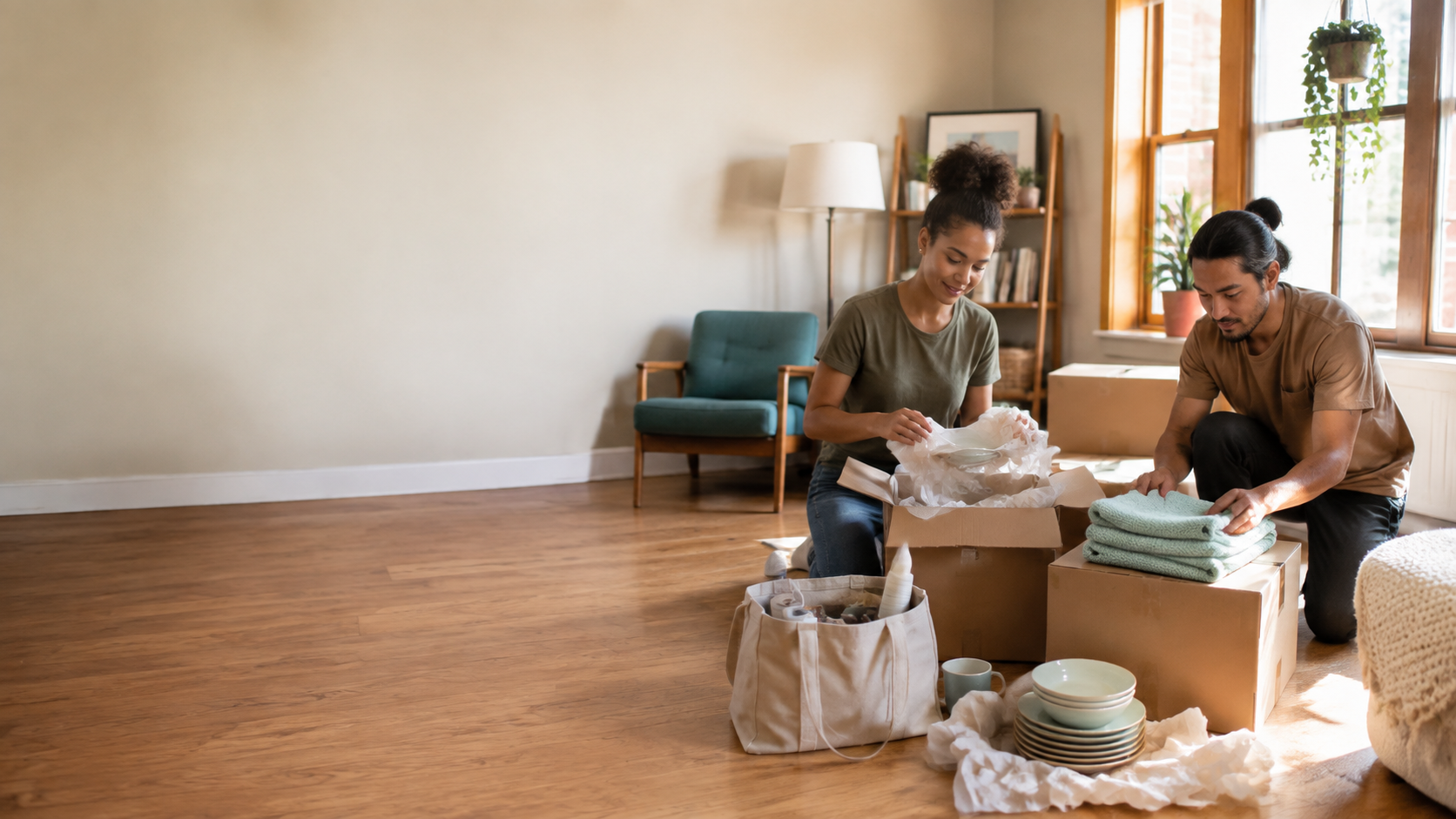
Start two to three weeks early, not the night before
Packing nearly always takes longer than people expect because every room contains decisions: what to keep, what to donate, what needs special protection, and what you will need before the move. Starting early lets you pack in layers instead of creating a last-minute pile.
Two to three weeks out
- Pack off-season clothing, books you have finished, décor, guest-room items, and rarely used kitchen pieces.
- Create donate, recycle, and dispose piles before filling boxes with things you no longer want.
- Collect sturdy boxes, tape, markers, labels, and small bags for hardware.
One week out
- Pack most closets, wall décor, serving pieces, and backup toiletries.
- Leave only the clothing, cookware, and supplies you will use until move day.
- Confirm your building's rules for flattened boxes, trash, elevators, and loading access.
If you hire packers, ask what they will pack, when they will arrive, what materials are included, and which belongings they will not handle. Do not assume a service is included just because it was discussed.
Match the box to the item’s weight
The safest rule is simple: use small boxes for dense, heavy items and large boxes for light, bulky items. A box can be physically full without becoming unsafe to lift.
Fill gaps so items do not shift, but stop before a box becomes difficult for one person to lift safely. Seal the bottom with enough tape for its weight and use a fresh box rather than trying to rescue one that is damp, crushed, or split.
Protect breakables with what you already own
You do not need to buy specialty material for every fragile item. Clean towels, socks, T-shirts, pillowcases, and linens can cushion small breakables while also reducing the number of separate items you need to pack.
- Wrap dishes and glassware individually; use towels or clothing between layers and leave no empty space where items can knock together.
- Use socks for stemware, small vases, and similar pieces when the item is clean and fully cushioned.
- Pad the bottom and top of the box, not only the sides. Write Fragile and This Side Up where appropriate, but pack it so it can tolerate normal handling.
- Keep the heaviest pieces at the bottom and never place a heavy box on top of a fragile one.
For art, antiques, electronics, or one-of-a-kind items, photograph their condition and ask a mover about its packing, handling, and protection policies before move day.
Use a labeling system that survives stacking
“Kitchen” alone is not enough when you have eight kitchen boxes. Write the destination room and a short contents description on the top and on at least two sides. That way you can identify a box after it is taped shut, loaded, and stacked against a wall.
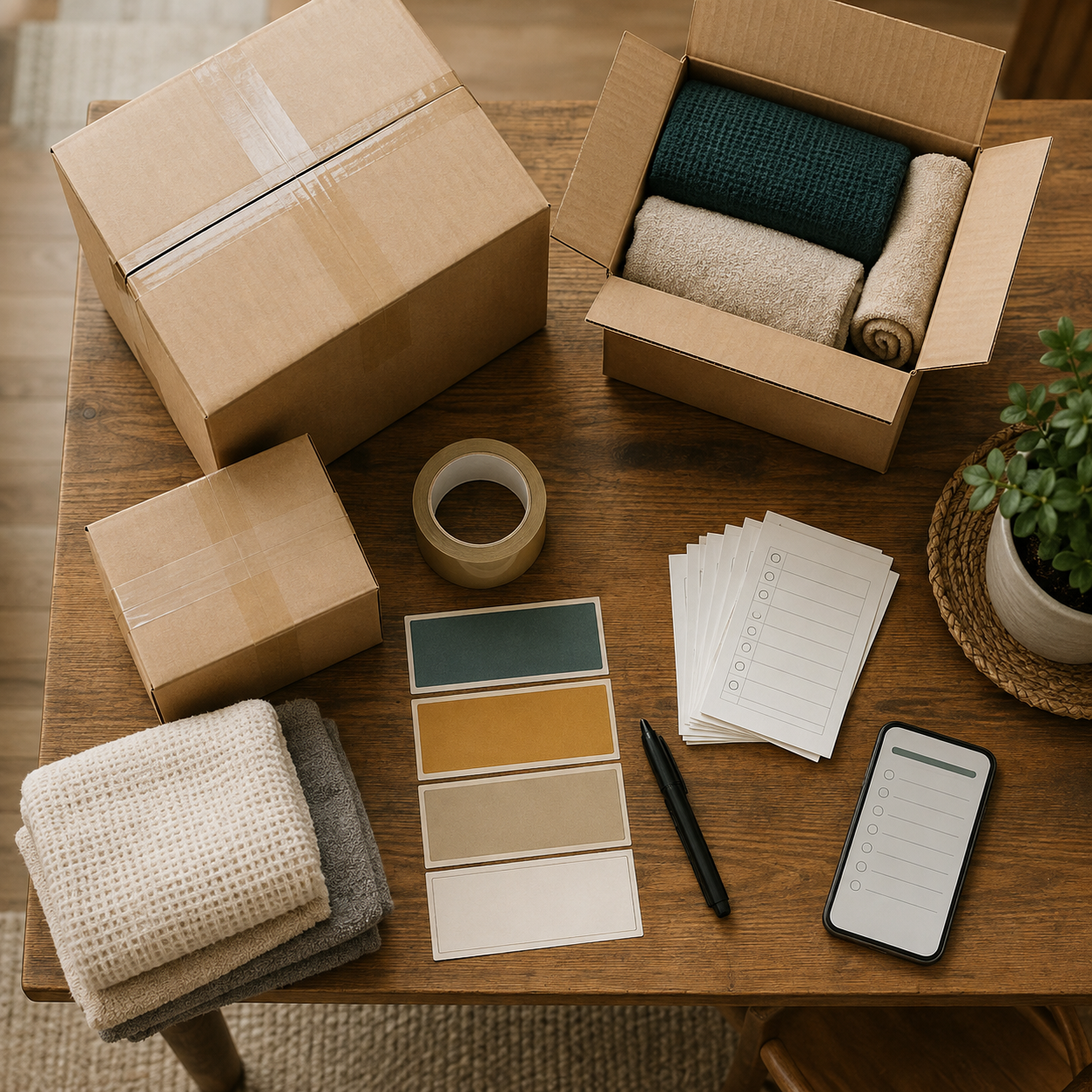
EXAMPLE LABEL
KITCHEN · BOX 12 OF 37
Everyday mugs, utensils, coffee supplies
OPEN EARLY
Numbering boxes adds another layer of control. Keep a simple master list on your phone with the box number, its room, and a few key items. You do not need to inventory every spoon; reserve detail for boxes containing things you may need to find quickly, such as tax papers, cables, or a child’s bedtime items.
Pack an “Open First” box and keep it with you
The first few hours in a new home are easier when the basics do not have to be found box by box. Use a clearly labeled tote or box, and keep it in your car or in a place you can direct the crew to unload last.
Must-have essentials
- Prescription medication and glasses
- Toiletries, toilet paper, hand soap, and towels
- Phone chargers, power bank, keys, and important documents
- Water, snacks, basic first-aid supplies, and pet or child essentials
First-night basics
- Sheet set, pajamas, and a change of clothes
- Basic kitchenware: cups, plates, utensils, can opener, and a knife
- Cleaning wipes, trash bags, paper towels, and a flashlight
- Small toolkit, tape measure, scissors, and a marker
Your personal bag should also carry jewelry, cash, identity documents, backup drives, and other irreplaceable valuables. Do not put them in the moving truck.
Prevent avoidable move-day surprises
Packing is only one part of a safe move. Before the truck arrives, measure large furniture and compare it with doorways, turns, stairwells, elevators, and the new room. Let a mover know ahead of time about a tight fit, disassembly need, piano, safe, or unusually heavy item.
Moving also takes more people and energy than expected. If you are not using professional movers, arrange enough reliable help for the heaviest work, assign roles, and avoid asking anyone to lift beyond their ability. A slower plan is better than an injury or damaged doorway.
For the broader scheduling sequence—including utility transfers, building access, and local disposal—use the Rochester moving timeline. Before you request prices, gather the access and item details in the mover-ready estimate checklist.